
Storm Safety
Beyond the Storm, Staying Prepared in the Off Season
Okaloosa Gas is committed to the safety and well‑being of residents across Okaloosa, Santa Rosa, and Walton counties. As your natural gas provider, our priority is ensuring you know how to respond safely and confidently to any situation involving natural gas—before, during, and after a storm.
Storm readiness doesn’t begin when the winds pick up. It starts long beforehand with awareness, preparation, and a clear plan. Taking the right steps ahead of time helps protect your home, your family, and your community.
In order to prepare for a storm while dealing with natural gas, practically nothing needs to be done.
However, it is a good decision to prepare other necessities in case any problems come up.
- To begin preparing, you should build an emergency kit and make a family communications plan.
- Consult www.ready.gov/hurricanes for methods on how to secure your home.
- Know your surroundings.
- Learn the elevation level of your property and whether the land is flood-prone. This will help you know how your property will be affected when storm surge or tidal flooding are forecasted.
- Identify levees and dams in your area and determine whether they pose a hazard to you.
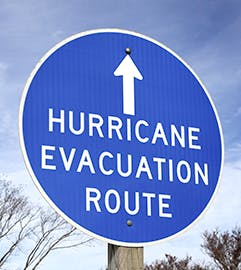
- Learn community storm or hurricane evacuation routes and how to find higher ground. Determine where you would go and how you would get there if you needed to evacuate.
- Hurricanes cause heavy rains that can cause extensive flood damage in coastal and inland areas.
In the case of an evacuation:
- Turn the thermostat to the off position before leaving
- For outdoor appliances, consider turning the shut-off valve to the off position while away
Do not attempt to:
- Disconnect your gas service or work on or around your gas meter
- Relight any of your gas appliances
- Service or check on outdoor gas equipment during severe weather
- Clear flood debris from your gas meter or from any other gas appliance, including your water heater
- Never attempt repairs during a storm. If you smell gas or suspect damage, evacuate immediately and contact your natural gas provider or emergency services.
If it floods inside your home or contacts natural gas appliances, call Okaloosa Gas at 850-729-4700 or complete the online Flood Damage Inspection request so we can inspect your meter and natural gas appliances for possible flood damage. NEVER be afraid to call.
Hurricanes cause heavy rains that can cause extensive flood damage in coastal and inland areas. If your home floods and water reaches natural gas appliances, call Okaloosa Gas at 850-729-4700 or request a Flood Damage Inspection. This allows us to inspect your gas meter and your natural gas appliances for possible flood damage.

- Check natural gas appliances first
- Make sure to check for the smell of natural gas which indicates a possible leak
- Do not attempt to make repairs yourself or use unauthorized, unlicensed individuals to work on your natural gas appliances (Unauthorized repairs can be unsafe and may void your warranty)
- Call 811, Before you Dig or request line locate online with Sunshine 811 at least two full business days before digging or disturbing the ground in any way, including to uproot trees or grind tree stumps .
- For the most part, all of your natural gas utilities should still work properly, even if the electricity is out. Don’t forget to contact Okaloosa Gas at 850-729-4700 if anything seems wrong. NEVER be afraid to call.
Are your Natural Gas Appliances Storm Ready?
Your natural gas keeps flowing during a hurricane. Our lines run underground, so gas service stays on even when the power goes out.
What matters is your appliance. Some run on gas alone; others need electricity for ignition or controls. Use the guide below to know what will work, what needs backup power, and what to check before storm season.
At a Glance - What Works When the Power is Out

Click on the appliances below to learn more:
WATER HEATING

Tank Water Heater
Keeps working. Its pilot light and mechanical valve need no electricity.
_______________________________________________________________________________________________
Tankless Water Heater

Will not run without power. It burns gas, but its controls and exhaust fan are electric. To use it in an outage:
1. Use a safe power source — a portable power station, battery backup (UPS), or inverter generator that supplies 120V pure sine wave power. Standard open-frame generators and car inverters can damage the circuit board.
2. Unplug the heater from the wall. If it is hardwired, you will need a professionally installed transfer switch instead.
3. Start the power source. Run generators outdoors only, and let them warm up 2–3 minutes before plugging in.
4. Plug the heater in with a heavy-duty extension cord. The display should light up.
5. Open a hot water faucet. You will hear the fan, then the igniter click; hot water follows in moments.
Follow manufacturer guidelines:
Each appliance may have specific instructions for safe shutdown, restart, or post‑storm maintenance. Always refer to your manufacturer's recommendations to ensure proper and safe use after a power interruption.
Your cooktop burners work without power — only the clock, timer, and electric igniter shut off.

To light a burner: Hold a lit match or long lighter at the burner, then turn the knob to Light.
• Do not use the oven. Modern gas ovens need electricity to open the gas valve. Never try to light one with a match.
• No gas at the burner? If you turn the knob and hear no hiss or smell no gas, your range has an electronic lockout and cannot be lit manually.
• Ventilate. Your range hood will not run, so open a window when cooking for more than a few minutes.
Follow manufacturer guidelines:
Each appliance may have specific instructions for safe shutdown, restart, or post‑storm maintenance. Always refer to your manufacturer's recommendations to ensure proper and safe use after a power interruption.
Your natural gas grill needs no household electricity.
• Push-button (piezo) igniter: Makes its own spark — no power needed.
• Battery igniter: Keep spare AA/AAA batteries on hand.
• Backup: Hold a long lighter at the burner while turning the knob on.

Follow manufacturer guidelines:
Each appliance may have specific instructions for safe shutdown, restart, or post‑storm maintenance. Always refer to your manufacturer's recommendations to ensure proper and safe use after a power interruption.
A natural gas generator runs on an uninterrupted fuel supply — but like any engine, it only starts if it has been maintained.

Know what it powers. Your transfer switch decides which circuits get power. Limited-circuit switches cover only selected items (refrigerator, some lights and outlets). Even whole-home systems may not run every large appliance at once.
Pre-storm checklist:
• ☐ Run a test cycle under load
• ☐ Check and change the oil per the manufacturer's schedule
• ☐ Replace dirty air and fuel filters
• ☐ Test the battery — the most common cause of failure to start
• ☐ Clear debris from around the unit
• ☐ Check gas lines and fittings for leaks, corrosion, or looseness
• ☐ Confirm the transfer switch changes over smoothly
• ☐ Schedule annual service with a certified technician
Follow manufacturer guidelines:
Each appliance may have specific instructions for safe shutdown, restart, or post‑storm maintenance. Always refer to your manufacturer's recommendations to ensure proper and safe use after a power interruption.

Gas lamps keep glowing in an outage. Protect them before the storm:
• ☐ Trim and clear — cut back dead branches and secure loose items nearby
• ☐ Tighten any loose fixture parts
• ☐ Protect electronics — turn off or unplug transformers, timers, and igniters
• ☐ Clean glass, burner ports, mantles, and bug screens
• ☐ Check for leaks — brush soapy water on fittings; bubbles mean a leak
• ☐ Test the flame — it should be strong and even
• ☐ Annual inspection by a licensed gas technician
Find or suspect a leak? Shut off the gas and call a qualified technician.
Follow manufacturer guidelines:
Each appliance may have specific instructions for safe shutdown, restart, or post‑storm maintenance. Always refer to your manufacturer's recommendations to ensure proper and safe use after a power interruption.

- Standing pilot models (a small flame that stays lit) generally work without power.
- Electronic ignition models may not light during an outage unless they have a battery backup — check your owner's manual.
- Blower fans need electricity and will not run, but the fire will still give off heat.
- Keep a battery-powered carbon monoxide detector working, especially with vent-free logs.
Follow manufacturer guidelines:
Each appliance may have specific instructions for safe shutdown, restart, or post‑storm maintenance. Always refer to your manufacturer's recommendations to ensure proper and safe use after a power interruption
Every Appliance: Before and After the Storm
- Before: Check that vents are clear, connections are secure, and appliances are in good condition
- After: Follow your manufacturer's instructions for restart and maintenance.
- Smell gas? Leave the area right away and call the District from a safe distance. 850-729-4700 or 800-239-3878 or dial 911.
- Never run a portable generator or grill indoors or in a garage.
Want appliances that keep working when the power doesn't? Schedule a free in-home consultation: call 850-729-4700 or schedule your appointment online.
Additional Safety Information from Local Contributors
Read more on Why Natural Gas Benefits Homes and Families during Hurricane Season published by the Northwest Florida Daily News.
Read more on how to Be storm ready this hurricane season with natural gas published by Get the Coast.